
A folding panel recharges a power station with no fuel and no fumes. Its watt rating is a test figure. Real output is lower.
Peak sun hours
One peak sun hour is one hour of full sun, about 1,000 watts per square meter on the ground. A panel's rated watts are measured at that level. A typical day gives about 5 to 6 peak sun hours, however long the daylight lasts (Goal Zero).
The best case
Best-case daily energy is the panel's watts times the peak sun hours. A 100 W panel on a 5 peak-sun-hour day gives at most 500 Wh (Goal Zero). Heat, dust, a poor angle and shade each cut it. Plan on less, and read the station's input display for the real figure.
Getting the most from it
- Check that the panel's plug and voltage match the station's solar input.
- Set it in full sun with nothing shading any part of it. The shadow of a single branch cuts output sharply.
- Face it square to the sun, and re-aim it as the sun moves.
- Keep it cool. A hot panel gives less than a cool one.
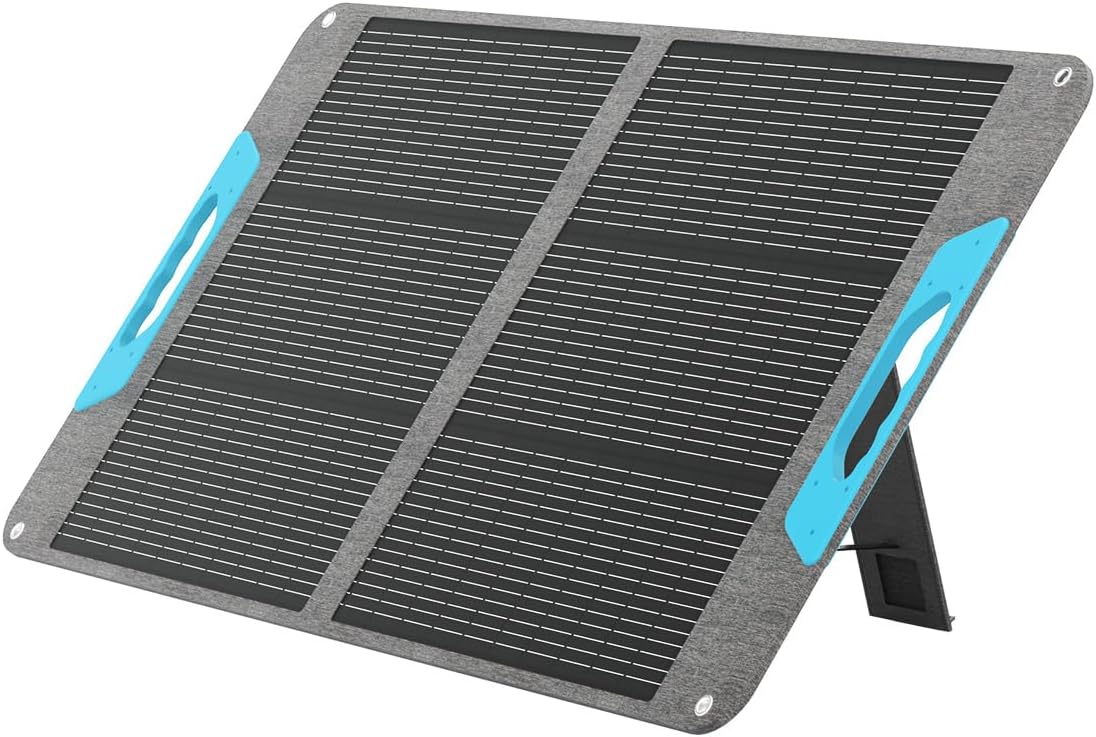
Power · Renogy
Renogy 100W Portable Solar Panel for Power Stations

Power · HQST
HQST 100W Portable Solar Panel

Power · DOKIO
DOKIO 100W Portable Solar Panel Suitcase with Charge Controller
Browse Power for every product in this list.
What this guide is not
This guide is general information, not professional advice. It does not replace training, the manual that came with your gear, or the instructions of local officials.
Sources
- Zero Dark Fall Field Guide: Home power: in the Zero Dark Fall app; the public index is linked
- Goal Zero: Peak sun hours, solar panels and camping power
- Power
- Renogy 100W Portable Solar Panel for Power Stations, 25% High Efficiency: title, details, rating and price from its Amazon page, captured 2026-11-15.
- HQST 100W Portable Solar Panel, N-Type, 25% Efficiency, IP67 Waterproof: title, details, rating and price from its Amazon page, captured 2026-11-15.
- DOKIO 100W Portable Solar Panel Suitcase with Charge Controller, Gray: title, details, rating and price from its Amazon page, captured 2026-11-15.